hardware · ongoing
Numby
Depressed, melancholic tamagotchi
Sep 5, 2025
Numby is a small creature that lives on an OLED screen, sits on a bench and thinks.
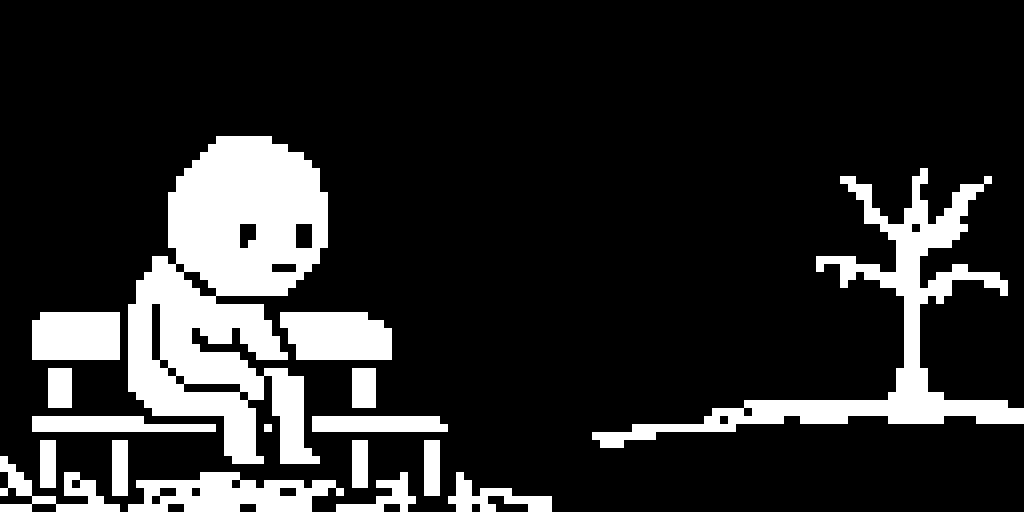
It started as a “depressed Tamagotchi”: an art installation pretending to be a digital pet. A normal Tamagotchi wants your attention all the time and punishes you when you forget about it. Numby doesn’t want anything. There’s nothing to feed, nothing to win and nothing to lose. It sits in a lonely place, breathes now and then, says something quiet and sometimes lets you share a moment with it.
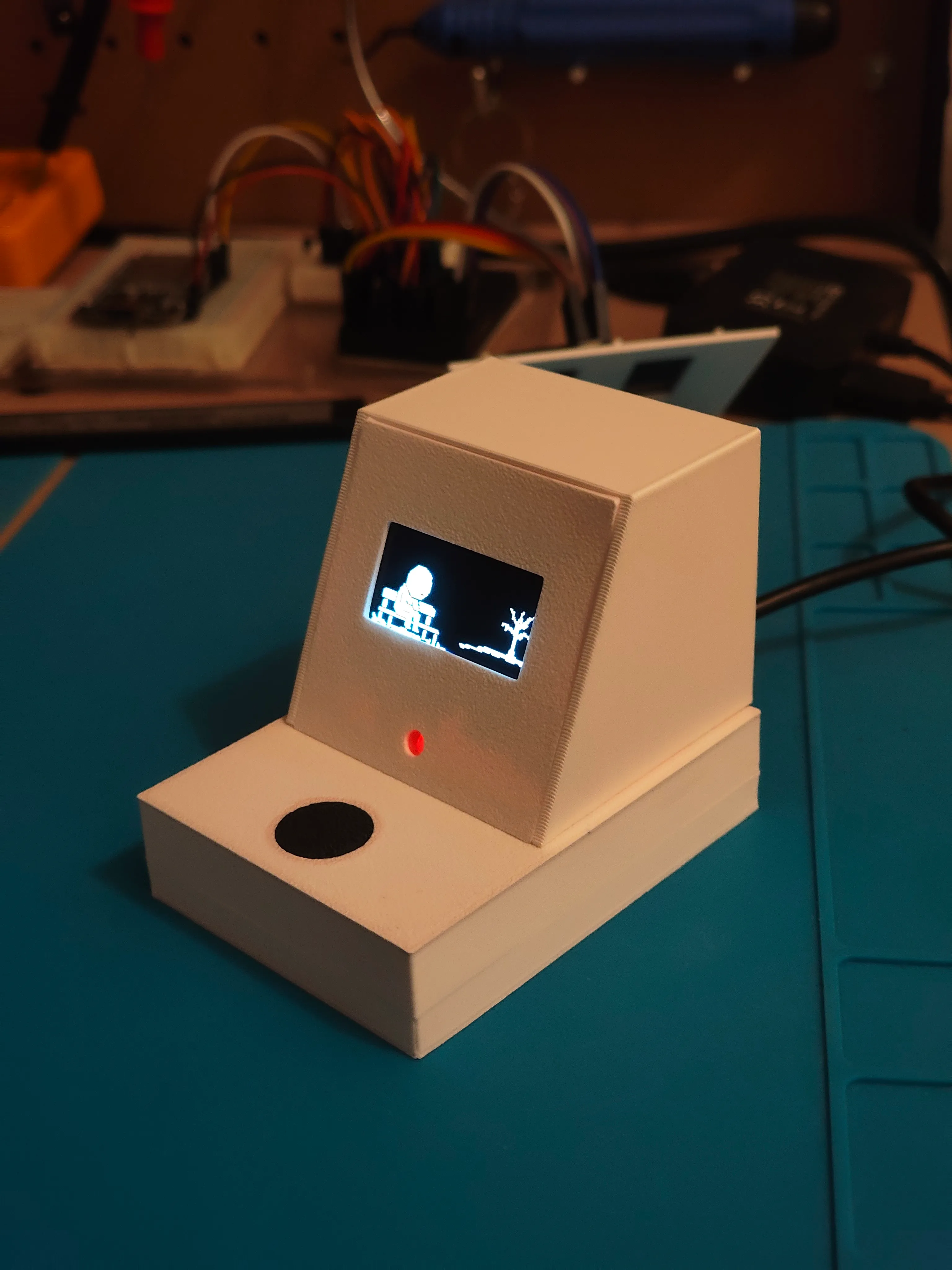
Current look
What it does
Most of the time Numby just sits there. Every 3 to 8 seconds it takes a slow breath.
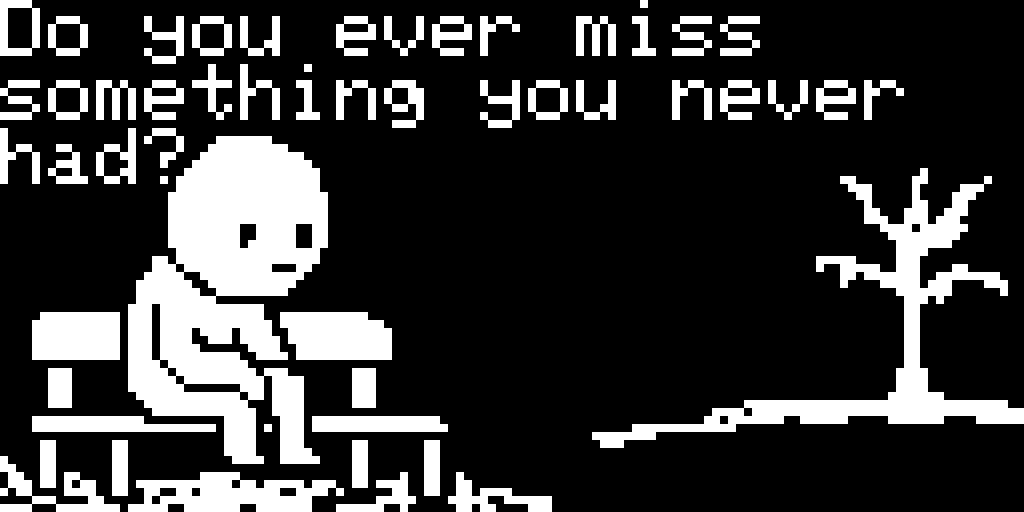
Once every couple of minutes a thought shows up in the corner of the screen, stays for five seconds and disappears. The LED blinks once when that happens. You can’t do anything about it, you just read it (or miss it).
Some of the things Numby says:
- “they will never come back”
- “Time feels sticky here.”
- “I wonder if pixels can cry.”
- “I miss the warmth of being needed.”
There are 91 lines in total. Each pool gets shuffled and goes through every line before anything repeats, so it never feels like a loop.
Shared moments
A couple times an hour the LED turns on and stays on. That means Numby is open to a moment with you. Touch the sensor and something happens in the sky: wind, stars or a shooting star.
The animations are short and Numby reacts after the event, so there are a couple of seconds of silence after the animation ends before it says anything. That gap is on purpose. It should feel like Numby is thinking about it.
If the LED is off, touching the sensor does nothing. You can’t spam Numby.
Hardware
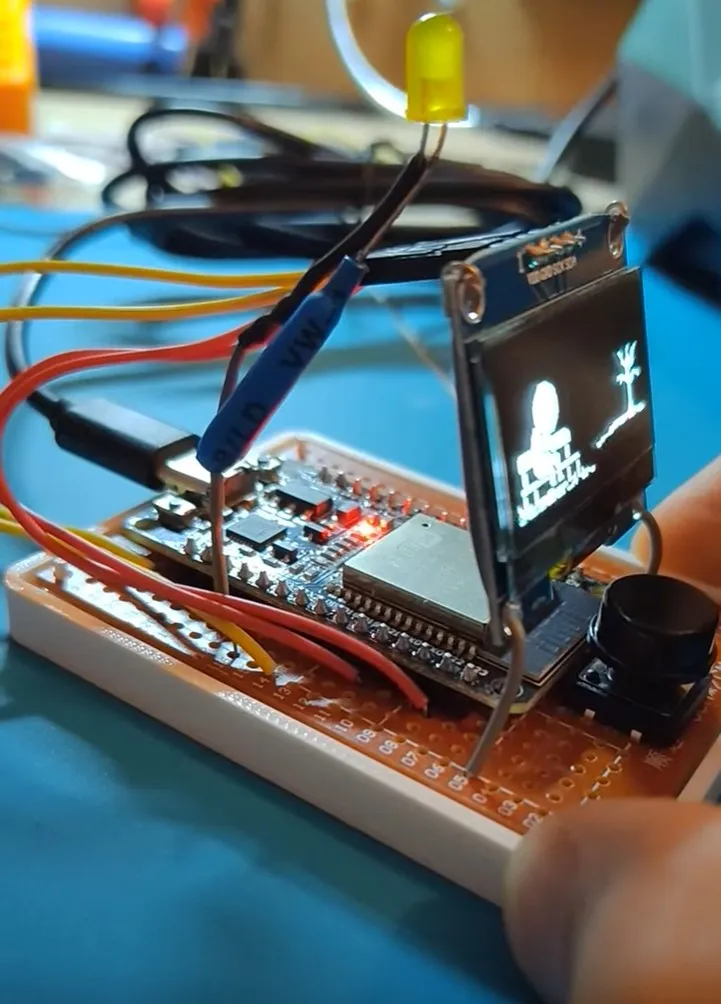
- ESP32
- 1.3” SH1106 OLED, 128×64
- TTP223 capacitive touch sensor
- one LED
The first version had a clicky push button. It worked fine, but a click is a harsh sound for something this quiet, so I swapped it for a touch sensor. Same pin, inverted logic, no more clicking.
Building it
Programmed using platformio on ESP32. Everything is drawn in layers every frame: the background, then Numby, then the event animation, then the text on top. Every layer is a full-screen 128×64 bitmap, drawn in Piskel and converted to C arrays with image2cpp. Numby gets an automatic black outline: the sprite is stamped eight times in black, one pixel off in every direction, and once in white on top. That way it stands out from the background without me drawing masks by hand.
To check how the lines wrap on the screen without flashing the ESP32 every time, I made a small web simulator of the OLED.
What’s next
- A real-time clock and different scenes through the day, with slow pixel transitions between them.
- More events and animations.
- Patting. The photoresistor sits on top of the case. Rest your hand over it for about a second and Numby says something like “I feel you there”.
- A better 3D-printed case, so it looks more like a proper desk accessory.
- Sound: a small buzzer for rare sad melodies and sighs (that’s a maybe).